Friday, 7 September 2012

Farmland Investments and Farmland Funds Should Soar in Value


As any of our blog readers know, we at GreenWorld are huge believers in investing according to global macro trends.  GreenWorld believes that it is best to identify global trends, and then ride the way as these trends develop.  One of these global macro trends is the continued high food prices.  If you look at the chart below, you can see that the food price index has more then doubled in the past 12 years.  This due to a number of reasons, one of which is clearly the shrinking arable land in the world.  Global population is increasing whilst arable farmland is decreasing, and supply and demand alone dicate that farmland should increase in value.

Smart investors such as a number of hedge funds as well as the legendary commodity investor Jim Rogers have taken advantage of this situation by establishing farmland funds.  There are a number of farmland funds focused on African farmland, where the low price of land provides the scope for both large dividend payments as well as plenty of opportunity for the long term increase in the value of the land. It is important emphasize that these farmland funds involve DIRECT OWNERSHIP OF FARMLAND, i.e. they are not financial funds in any sense of the world.   Of course, many individuals who recognize the opportunity in direct farmland investments will say to themselves, "this is all well and good, but these big farmland funds are just for institutional investors and the wealthy".  Luckily, this is no longer true!  GreenWorld is at the forefront of rolling out a number of investment opportunities that are focused on direct ownership of farmland and target retail investors due to the very low minimums they require.  Below are GreenWorld's two core farmland investments.  Please contact us at info@greenworldbvi.com if you are interested in further details:

Farmland investment in Africa

Farmland investment in Europe


Wednesday, 22 August 2012

Forestry Investments as a Hedge Against Inflation

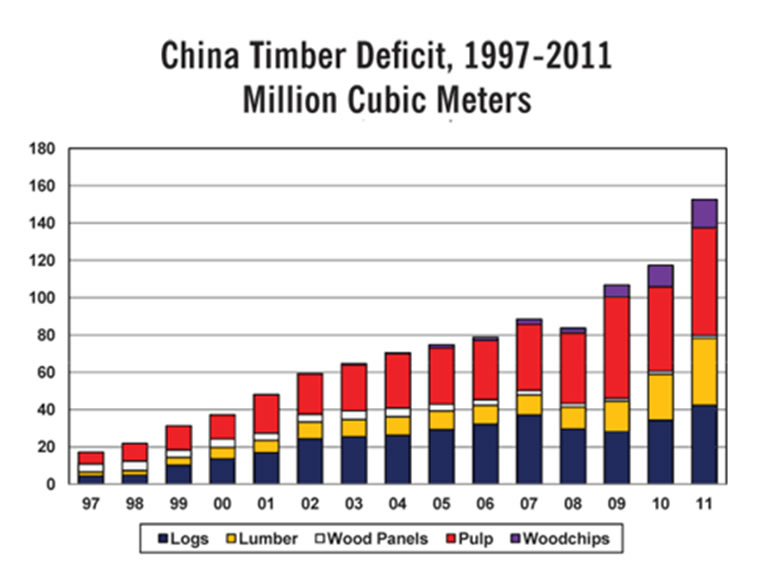
If you are worried about inflation and/or are interested in an asset more stable then stocks, then forestry investments are one of the ideal alternatives available.  Forestry provides an excellent inflation hedge; the demand for wood is causing increasing shortages – especially in China as the graph below demonstrates; and the performance of forestry investments are uncorrelated to financial assets like stocks.  After all, trees do not care what the latest numbers from the DOW, FTSE or Nikkei are.  

One excellent forestry investment to consider is a teak investment.  When looking at a teak investments, consider that fully mature wood is the most valuable. Peak returns for teak are usually projected at 20-25 years, which is why GreenWorld and our forestry management partner have structured our teak investment on a 25-year plan.  However, one excellent feature of our investment in teak is that our investors can exit after just 5, 10, 15 or 20 years.  The project manager will buy back your land and trees at cost+5% per annum or you have the option to sell via our established trading platform or to a third party.  This gives you the option of a GUARANTEED exit strategy, or else if you have a longer-term time frame you can hold your teak investment to maturity.  Please visit our website to learn more about GreenWorld's investment in teak.
Forestry Investments - An excellent "China Play"!

Tuesday, 31 July 2012

Australian Farmland Investment To Benefit From High Wheat Prices


Australian wheat - unique farmland investment for retail investors
We at GreenWorld have long seen continued strong interest in our portfolio of farmland investments.  One of our most attractive projects is our farmland investment in Australia.  This project is quite attractive due to the extremely low price of farmland in Australia (approximately US$600/acre versus US$10,000/acre in England or the US).  The investment targets annual dividends of approximately 9%, plus any upside in the capital value of the land.  Finally, the political and economic stability of Australia makes this one of the more attractive alternative agriculture investments available to retail investors.

GreenWorld's Australian farmland project focuses on wheat farmland located in the western Australian wheat belt.  What is making this project particularly attractive now is that wheat prices have skyrocketed lately, and as this article notes, the Australian wheat crop has benefited greatly from this trend.  For investors in Australian farmland, this promises a year of very attractive annual dividend payments!

If you are interested in finding out more information on how you can participate in this project, please contact us at info@greenworldbvi.com.

Saturday, 9 June 2012

Series of Articles on Farmland Investing

GreenWorld have always believed that farmland and agriculture investments are an excellent alternative asset class that provides diversity from a traditional portfolio of stocks and bonds.  We recently have written a series of articles published on Technorati that provide an overview of agricultural land investing:

Farmland Investments:  A Unique Asset Class Becomes Available to Individuals

Arable Land Shortage and the Case for Farmland and Agriculture Investments

Farmland Set to Profit as Wheat Prices Soar

If you are interested in investing in farmland, please consider our two latest opportunities:

European Farmland Investment

African Farmland Investment

Both of these projects are directed at retail investors as they have low minimum requirements and are purely passive investments where the project manager handles everything from planting of the crop to harvesting to sale.  Investors are paid regular yearly dividend income, plus receive any appreciation in the value of the land when they sell their investments.

Contact us at info@greenworldbvi.com for more information


Sunday, 3 June 2012

Forestry Investment in Bamboo Provides High Yield Dividends and a Hedge Against Inflation


Investing in socially responsible Bamboo
Alternative Bamboo Investments for High Dividend Yields
As markets continue to gyrate and fear runs high over the fate of the Eurozone, it is natural that investors might want to consider alternative investments that are uncorrelated to stocks.  One excellent option to consider are alternative bamboo investments.   Bank savings rates are extremely low, and high dividend shares still still expose you to daily stock market risk.  However, if you invest in bamboo, you get the income of a dividend stock or high-yield bond, but without the daily fluctuations in the share price.   

Bamboo starts out paying a yearly income of approximately 5%, and it ends up growing to as high as 30% by the end of the 15 year term of the investment.  On current projections, it is quite possible that a bamboo investment could produce a total return of around 400%-500% over the 15 year term of the investment.  
Finally, the global market for bamboo products is expected to double from US$10 billion to US$20 billion  in the next five years alone, as bamboo is used in everything from flooring to hangars or coat racks, bamboo toys, and even in fiber.  For investors looking to diversify away from stocks, to obtain access to a rapidly growing global market, and to obtain extremely high dividend yields over a sustained period, bamboo as an investment is well worth considering.

To learn more about GreenWorld's bamboo investments, please contact us at info@greenworldbvi.com or ring us on  +44-20-3286-2975


Sunday, 22 April 2012

New Article on the Dangers of QE and Hedging Against Inflation

Risk of High Inflation
We are quite pleased to note that we recently wrote an article published on the Market Oracle website in the UK.  The full article is here.  In the piece, we wrote about the dangers of QE and inflationary risks emanating from the QE policy, as well as how individuals can use "Real Asset" investments such as forestry and farmland to hedge against the risk of inflation.  Its worth noting that inflation in the UK has remained above 3pc for 28 months straight, and was recently at 3.7pc in the US.  Whilst central bankers have been worrying about the risks of deflation, it seems inevitable that some of the new money created by QE will eventually leak into the real economy and pose inflationary risks.  Perhaps the central bankers might at some point turn their attention to this danger?

Friday, 30 March 2012

Liam Halligan on the Dangers of Quantitative Easing ("QE")

Since its implementation by the BOE at the height of the financial crisis, QE has been a controversial policy to say the least. We at GreenWorld have always felt that QE has the potential to cause inflation - if not now, then down the road.  For those who share the same worry, there was a fantastic column by the Telegraph's Liam Halligan on the dangers of QE.  Mr. Halligan writes:
"Future inflation, not disinflation, is the problem the UK faces. For now, most of the QE “proceeds” are sitting on the balance sheets of banks pretending to be solvent...What happens to inflation when that massive increase in base money is leant out? What happens when the mask slips and the markets focus on “currency debasement”, which then pushes up imports prices as sterling falls?" 
Mr. Halligan is spot-on, the danger is indeed real.  If you are at all interested in this subject, do read the entire article here.  Once you read it, ask yourself, what type of investments would you want to protect against any inflation created by QE, whether in the UK or elsewhere?  As we noted in our previous post, the best kind of inflation hedge investments, are so-called "hard assets" that will rise in value along with inflation.  If you are interested in a hard asset that pays good current income, hedges against inflation and also has tremendous value, consider farmland investments.  We recently wrote an article on Technorati on how farmland investing is now increasingly accessible for individual retail investors. We would welcome the opportunity to discuss the following farmland investment options with you further - feel free to contact us at info@greenworldbvi.com.